
How to Protect Stone Cladding and Flooring from Damage and Dirt
The declining interest rates on deposits have increased the demand in the real estate market, attracting many participants eager to invest their free financial resources. Observing buyer behavior closely, it confirms the rule that only what isn't on the shelf hasn't been sold. Especially when it comes to properties in so-called "prestigious locations" with desperately shabby and neglected facades, the buying frenzy resembles that of hungry piranhas.
However, below we talk about a different type of clients and investors with ever-increasing requirements. These are the so-called "slow buyers," who wait for their property, actively searching and applying clear criteria, with no tendency to compromise.
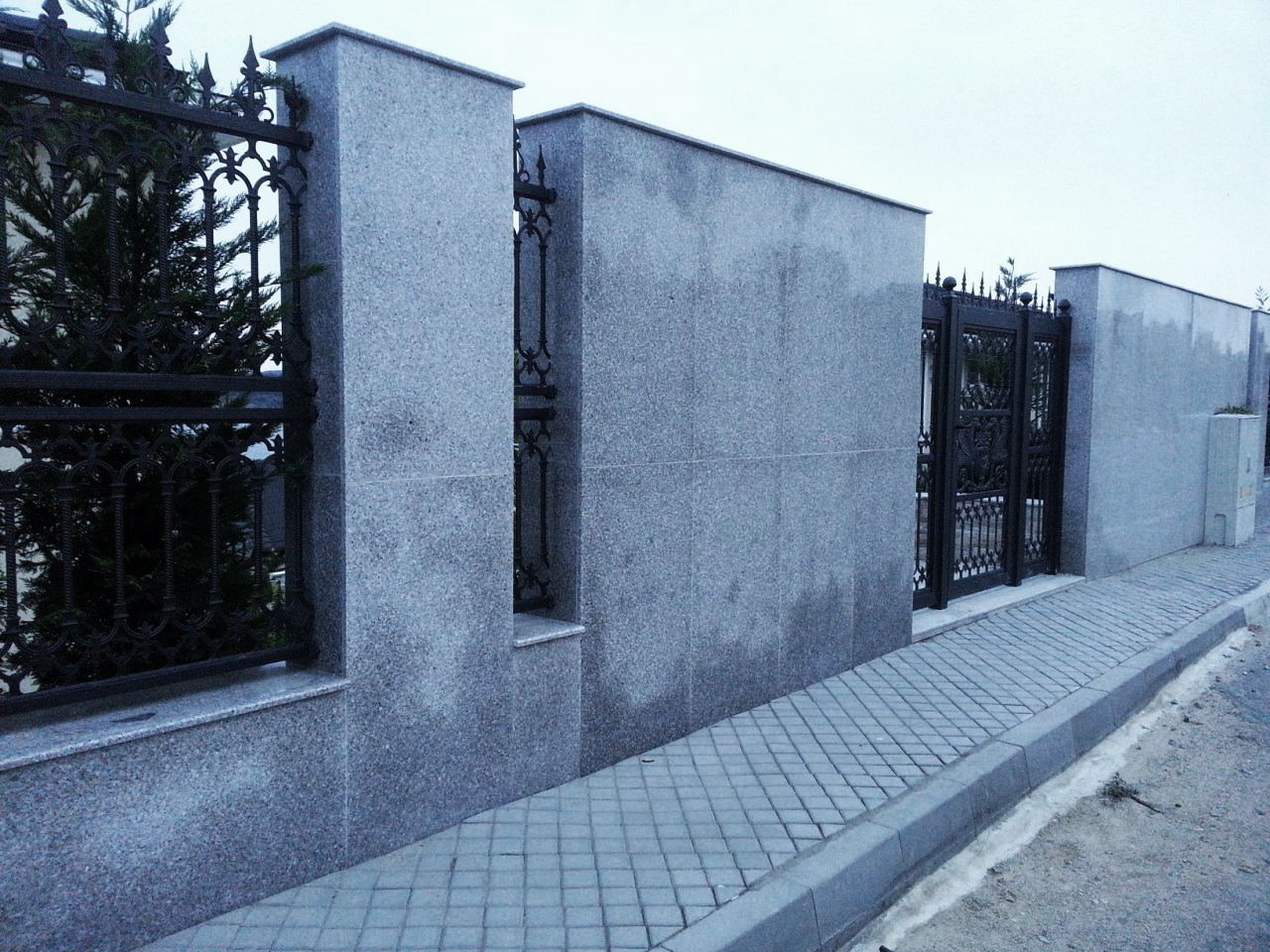
Image 1: Typical example of capillary moisture penetration through stone cladding.
One of the leading indicators for determining the value of a property is the level of depreciation of the building it is in and the degree of its maintenance - parameters clearly recognizable in the exterior appearance of the building. There's no doubt that the quality of life for future residents is a function of the state of the exterior, as part of the living environment. The better preserved the facade and common areas, the higher the property value. A study in the US shows that the potential sale price of residential properties can decrease by up to 20% just from the unwelcoming appearance of the facades and surrounding space.
The facade cladding of most old buildings and the more expensive new ones is made of natural stone. Some believe that the high initial cost guarantees a trouble-free and long life for the stone surface, but practice and time show otherwise. Water penetrating the pores of natural stone and the substances dissolved in it are major causes of its damage. Our climatic conditions can be considered among the most unfavorable. The fluctuation around zero of daily temperatures in winter suggests numerous cycles of freezing and thawing of the water in the stone. This leads to the destruction of its surface. Even granite claddings are susceptible to weathering and fragmentation, especially in combination with capillary penetrated moisture. In addition to this destructive scenario, there is the transfer of soluble salts (whose main source is the cement adhesives and grouts used during the installation of stone cladding), manifesting as white streaks on facades, especially new ones.
Images 2 and 3: Example of moisture reaching the reinforcement/fasteners, resulting in rust spreading over the surface of the stone cladding.
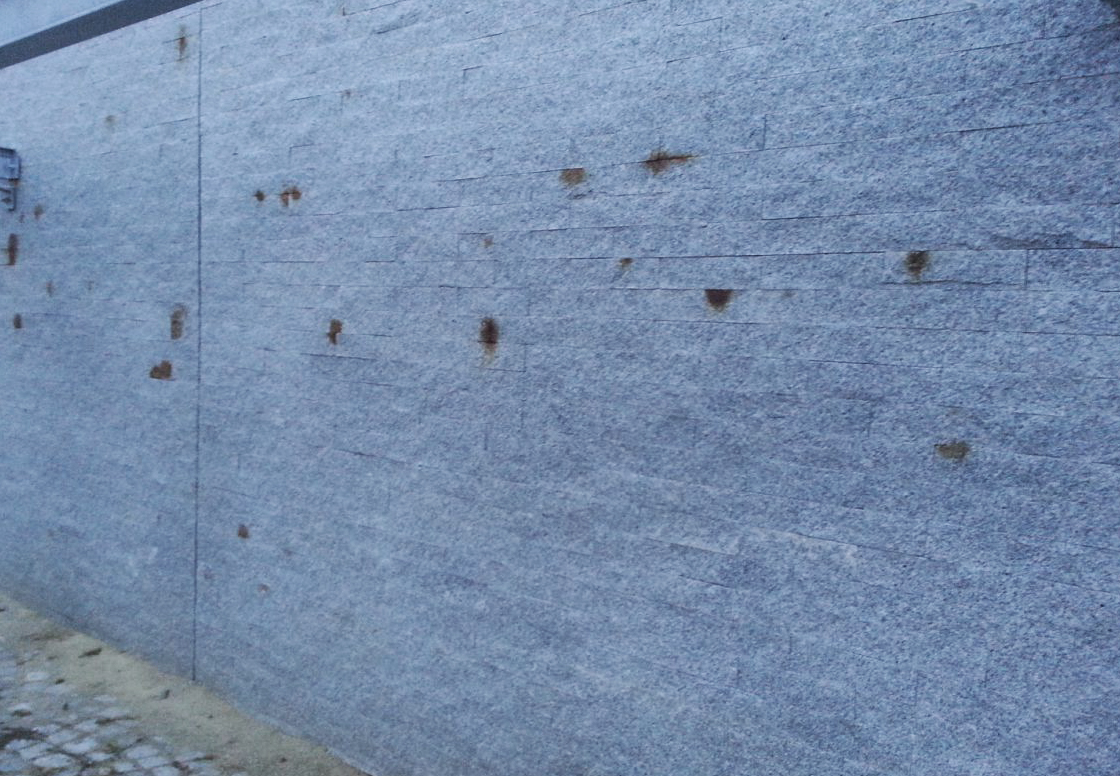
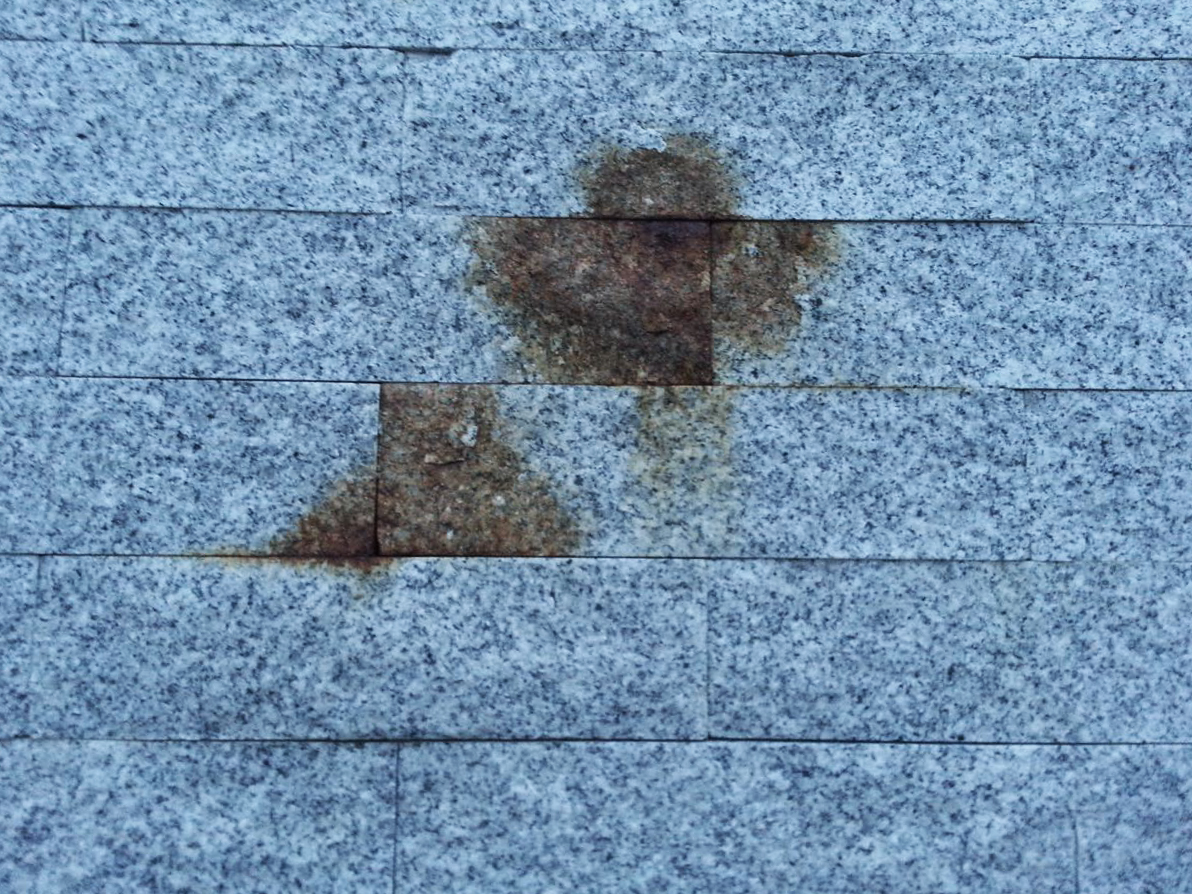
So, how do we not only protect the stone cladding of facades and flooring from destruction but also make them look attractive, preserve their architectural value, reduce contamination, and extend their life?
The product SiloTreat® Stone BE is specifically developed for protecting facades covered with natural stone. Correctly selected according to the geological type, SiloTreat® Stone BE is applied to the cladding surface, penetrating deeply and chemically bonding with the substrate. The physical effect of the product consists of increasing the surface tension to a value higher than the capillary suction force and the pressure created by wind and rain.
By excluding the presence of water in the liquid phase, we prevent the creation of conditions for the development of algae, molds, mosses, and fungi. The surface repels water, and the soot, dust, and salts carried by it have no chance to settle and form dirty spots.
Unlike standard coatings, which seal the surface as a film, SiloTreat® Stone BE allows water vapor to pass through. The substrate retains its "breathing" ability, not allowing moisture to linger in it. The facade remains breathable and inaccessible to water.
The surface hydrophobizer SiloTreat® Stone BE remains unaffected by solar radiation, maintaining its hydrophobic qualities for years. Unlike SiloTreat® products, standard film-forming coatings block the pores on the surface. The large molecules of polymer coatings for water protection seal the stone and prevent vapor passage. The water vapor from inside the building remains trapped in the cladding, freezes in winter, and destroys its surface. In addition, surface coatings are exposed to ultraviolet radiation and soon degrade, sometimes giving the surface a dusty appearance.
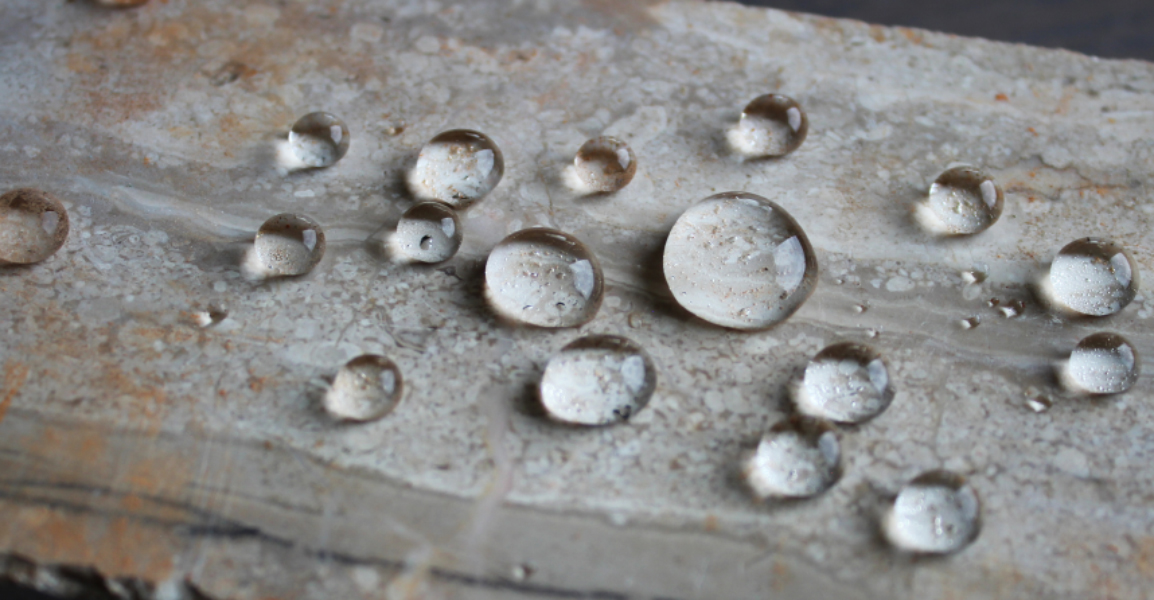
Image 4: Marble treated with SiloTreat® Stone BE.
Properties of SiloTreat® Stone BE:
- Particularly suitable as a water-repellent impregnation for various types of natural stone, sandstone, limestone, marble, granite, and more.
- Quick chemical reaction with the substrate.
- Excellent long-lasting "beading effect."
- Creates a vapor-permeable, colorless protection.
- Prevents the absorption of water and soluble salts (e.g., chlorides).
- Significantly reduces the formation of white deposits on the protected surface.

Image 5: Comparison – untreated part and part protected with SiloTreat® Stone BE.
Areas of Application
- Facade cladding from natural stone.
- Polished interior surfaces from natural stone (floors, walls, kitchen and bar counters, countertops in public places, bathroom claddings).
- Exterior flooring from natural stone (pavements, verandas, terraces, stairs, squares).
- Cultural monuments.
Application Method of the Product
- SiloTreat® Stone BE is applied using airless sprayers (HVLP).
- Apply the product continuously in successive horizontal lines from bottom to top without repeating.
- Remove dripped drops as quickly as possible using a painter's brush.
- The product should be protected for at least 4 hours before coming into contact with liquids.
- Reapplication would enhance the self-cleaning effect, especially for facades.
- The hydrophobic effect appears within 4 hours of surface treatment.


